Microfluidics & diagnostics
Microfluidic chips with channels down to 12 µm, adhesive-free multilayer bonding and very large arrays of microvalves. Parts made for medtech customers.
Explore microfluidics →Precision molding platform
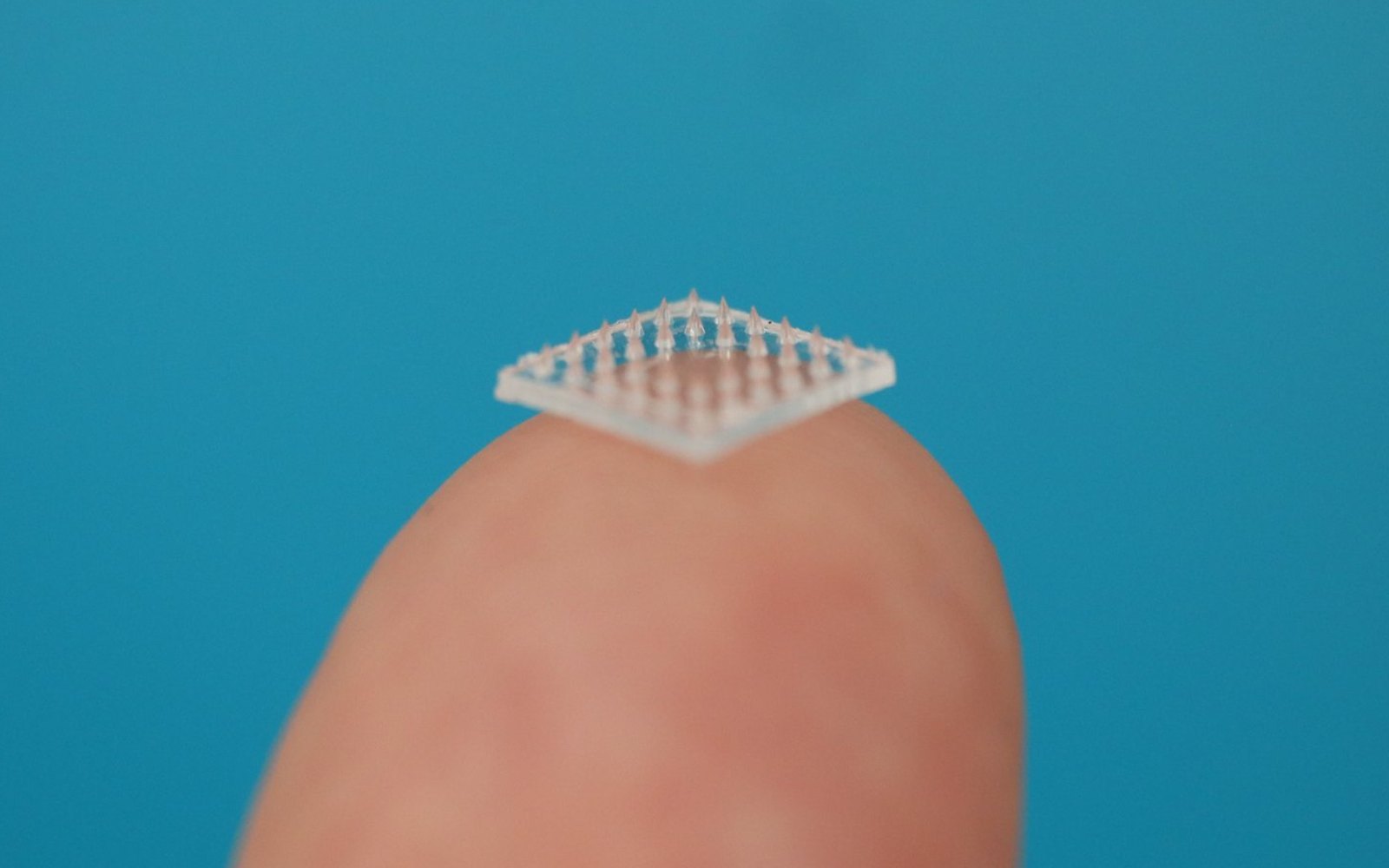
SmartForge molds precision polymer parts with micron-scale features in a single shot. We already make microfluidic parts for medtech customers, and now make hollow microneedle arrays designed to turn injections such as GLP-1s and insulin into a patch too small to feel.
01 The platform
We mold the deep, narrow features conventional molding can't. Today we make microfluidic parts for customers and hollow microneedle arrays ready for pharma evaluation, and we welcome optics projects.
Microfluidic chips with channels down to 12 µm, adhesive-free multilayer bonding and very large arrays of microvalves. Parts made for medtech customers.
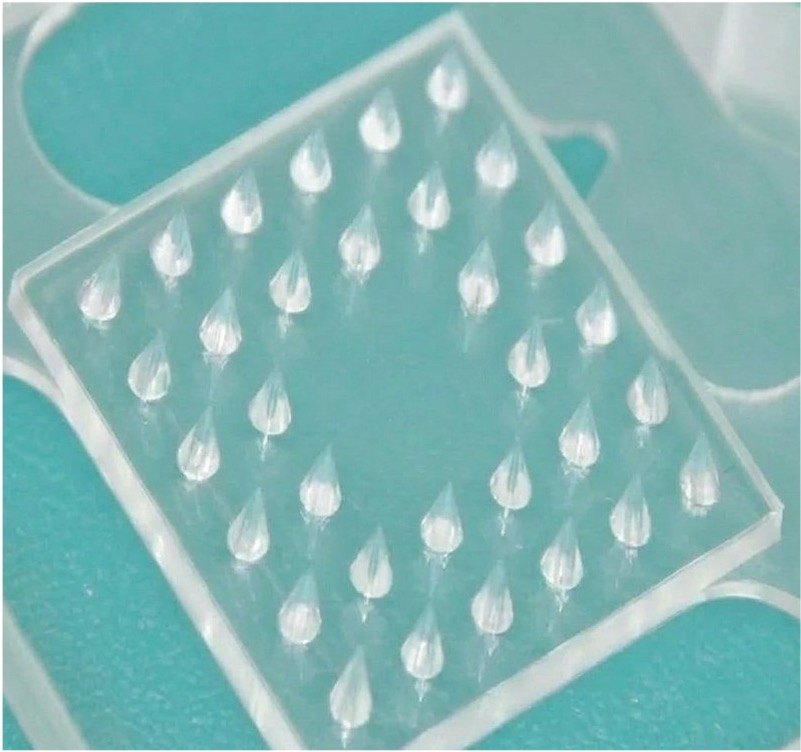
Explore microfluidics →Hollow polymer microneedle arrays, molded with their channel in a single shot. Arrays are available now for pharma evaluation, designed to deliver the approved liquid drug with little or no reformulation. They also suit wearable devices and sensing.
How it works →Micro-optical parts and other components where fine features must hold their tolerance. Bring us the part.
Talk to us →02 Hollow microneedle arrays
Conventional injection molding has not been able to make that shape reliably. Silicon is brittle and costly. After three decades of industry effort, most of the field turned to dissolving and coated microneedles. Both carry the drug as a solid, which limits the dose and makes a consistent, complete dose hard to achieve.
We mold each microneedle and its channel as a single part, in medical-grade cyclic olefin polymer (COP). No laser drilling, no etching and no post-processing: the channel is there when the part leaves the mold. Patents are pending on both the microneedle structure and the molding process.
Because the channel is hollow, the patch is designed to deliver a drug's existing liquid formulation, with little or no reformulation. The dose is the liquid delivered, not what a solid matrix releases in the skin. The intended route to approval is a bridging study for each partner's own molecule.
Key figures
Our model with pharma. Partners license the platform for their own molecules. We supply the microneedle design, tooling and process; the partner owns its drug and its clinical program.
Start a technical discussion03 Microfluidics & diagnostics
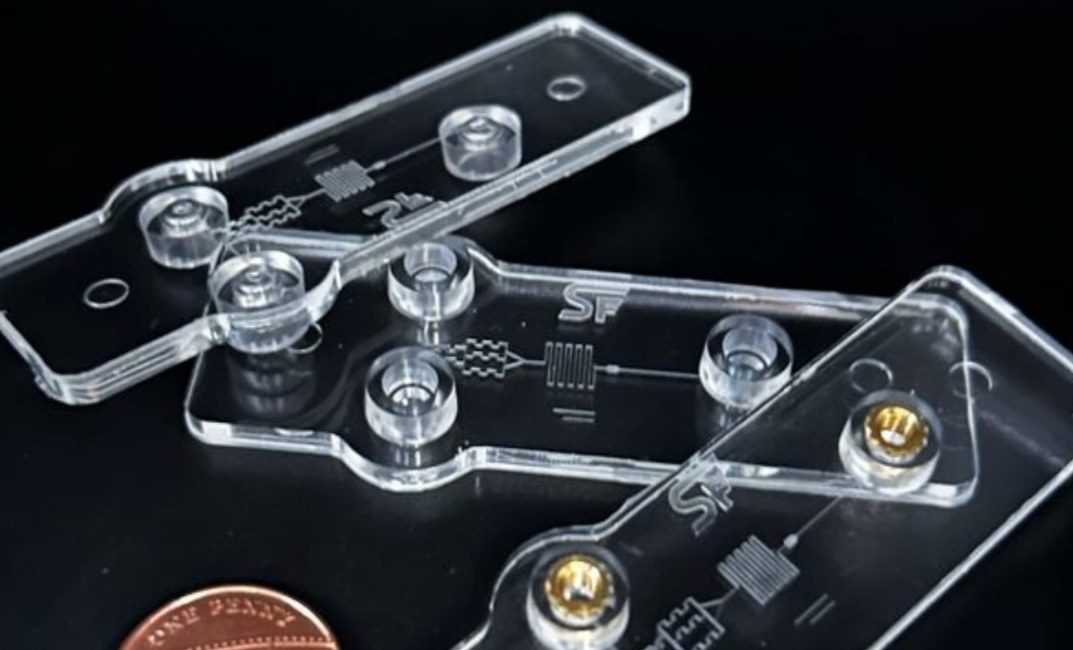
We mold precision microfluidic and diagnostic parts: channels down to 12 µm, zero-draft walls and multilayer chips bonded without adhesive, held to tolerance from first prototype to production. Made today for medtech customers, typically in polycarbonate and cyclic olefin polymers, with other thermoplastics on request.
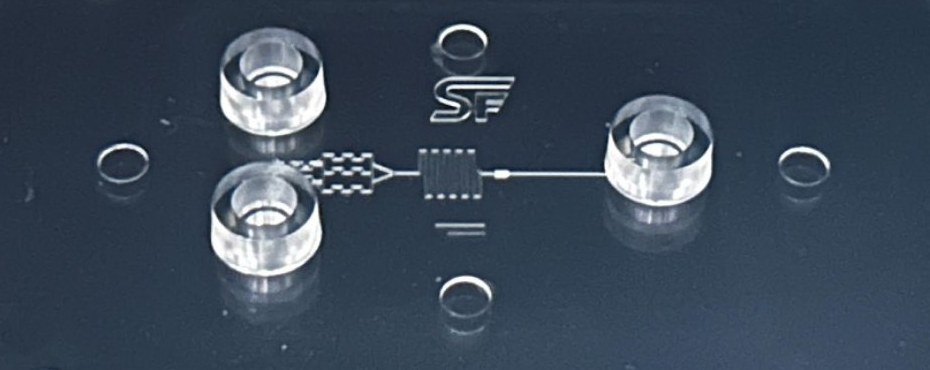
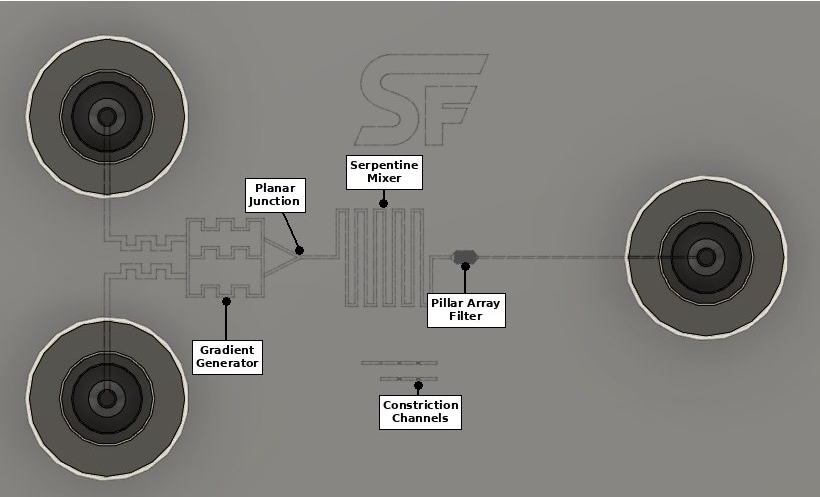
DM-K392 · Demonstration chip
A gradient generator, a serpentine mixer, a pillar filter and constriction channels down to 20 µm, with three millimeter-scale ports, in one molded COP part.
Capabilities
Bonding precision
Adhesive-free bonding that keeps channels square and sealed. Bonded spiral separators with 30–60 µm channels show no channel collapse and no leakage.
Multilayer structures
Stacks of rigid layers and thin membranes, down to tens of microns thick, bonded into a single part without adhesive.
Integrated microvalves
Microvalves with silicone or polyurethane membranes, built into the bonded stack.
More customer parts and demonstration chips
Tolerances hold as features shrink.
12 µm channel
Spiral blood separator
Polycarbonate spiral with vertical walls and a 12 µm-wide, 60 µm-deep channel, molded in the same shot as its ports.
3 interfaces, one mold
Multi-inlet separator
A Luer slip, a 0.8 mm microhole and a high-pressure thread, all molded from a single mold.
30 × 30 µm channels
COC chip with wells
A 1 mm COC chip with 5 mm tall wells, metallic connectors and a 100 µm COC film.
Microfluidics · How we work
Send the drawings, CAD or design files for your part or assay. We mark up moldability and tolerance risk in one pass, and tell you where the hard features are before any tooling is made.
The prototype is made with the same tooling and material you will scale on, so the part you test is the part you make.
Production units come off the same process, with no geometry drift from prototype to pilot to launch.
Materials
We work mainly in polycarbonate and cyclic olefin polymers (COP and COC), and in most standard thermoplastics. First parts are quick to make and affordable. Bonding is adhesive-free, so a multilayer part can stay a single-polymer device, with one material to validate.
Clear and tough: the workhorse for multilayer chips.
Low autofluorescence and low extractables for optical and life-science assays.
Most standard grades. Tell us what your assay needs.
Attach it to a message and we will tell you honestly whether we can make it, and what the tolerance risk is, before anyone commits to tooling.
04 Company
We founded SmartForge to industrialize one idea: a precision molding process for micron-scale polymer parts. Our founding team brings decades of work in polymer engineering, microfluidics and life-science manufacturing.
Parts made for medtech customers.
Backed by an ISO 13485-certified, FDA-registered manufacturing partner for production and scale.
Standard thermoplastics, from polycarbonate to cyclic olefin polymers.
Based in London and Los Angeles.
Two Innovate UK awards in 2026, both led by us: the Biomedical Catalyst and ATLAS.
Patents pending on hollow and solid microneedle arrays, precision-molded microfluidic devices and the molding process.
05 News
A drop rig with speed gates and a force sensor now measures penetration against controlled impact energy. In the first runs, all 32 microneedles punctured the simulant.
Dye driven through a 32-microneedle array exits every microneedle over a range of applied flow conditions, including visible jets.
All 32 microneedles passed through two stacked layers of Parafilm in each of ten applications, with no visible damage.
A month after the Biomedical Catalyst award, we won a second Innovate UK-funded project, through ATLAS, developing manufacturing technology for medical implants.
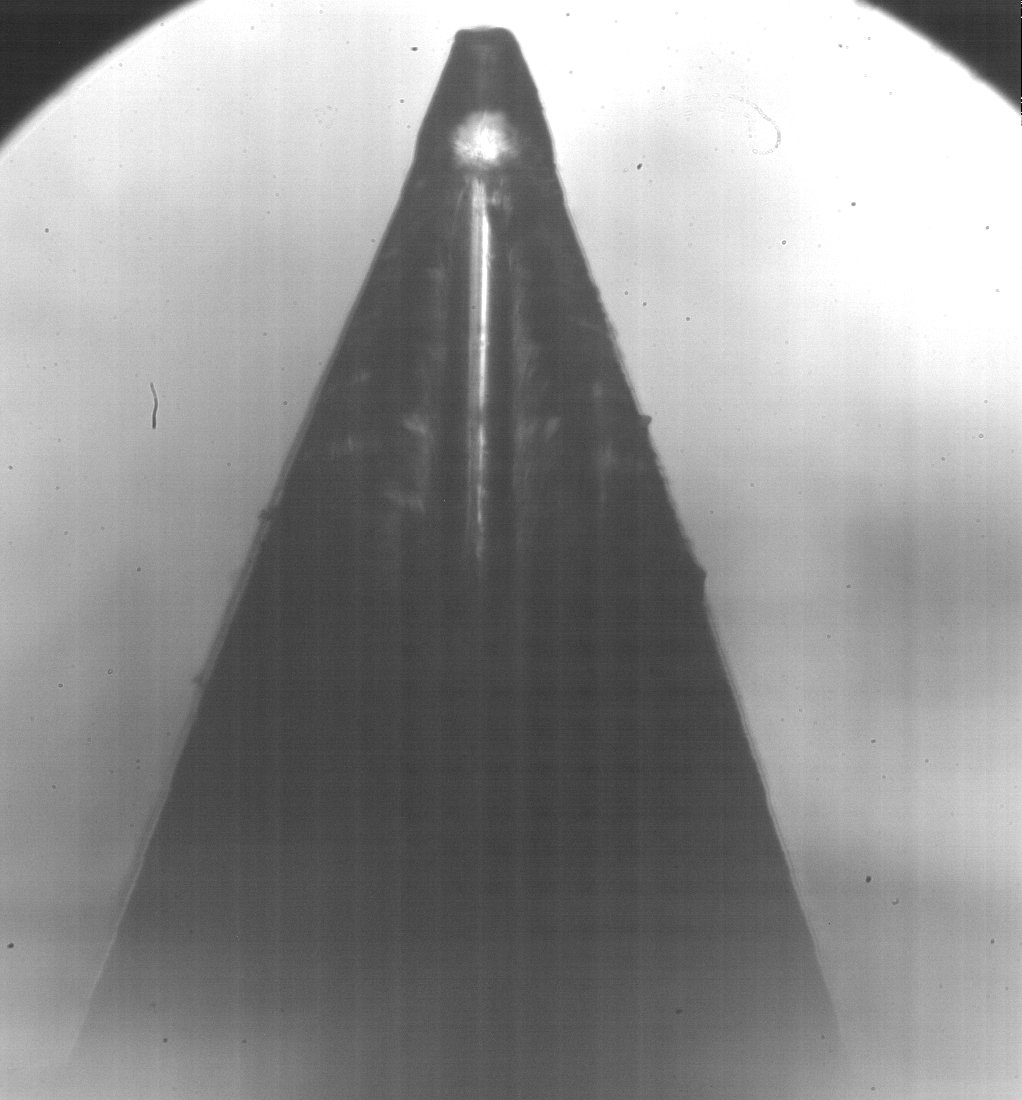
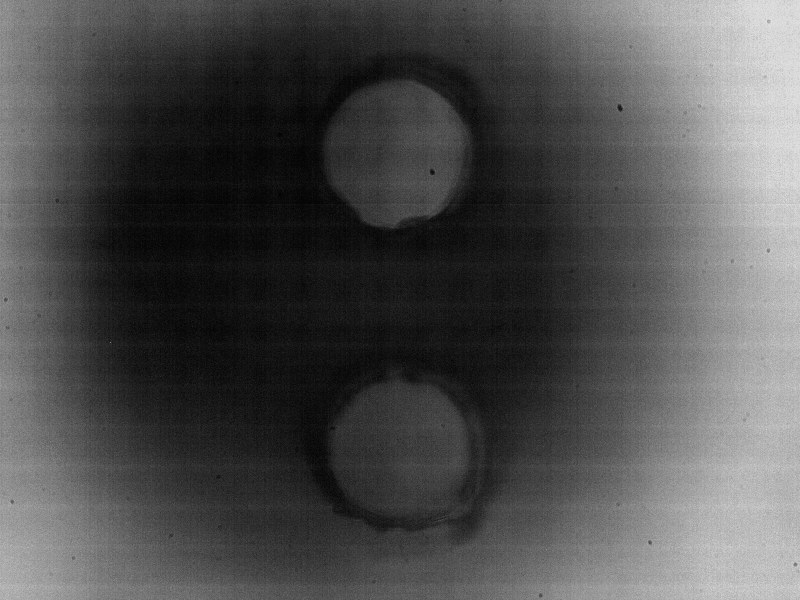
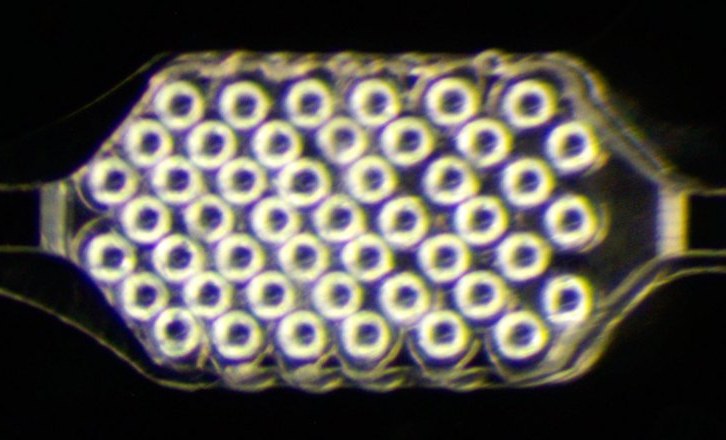
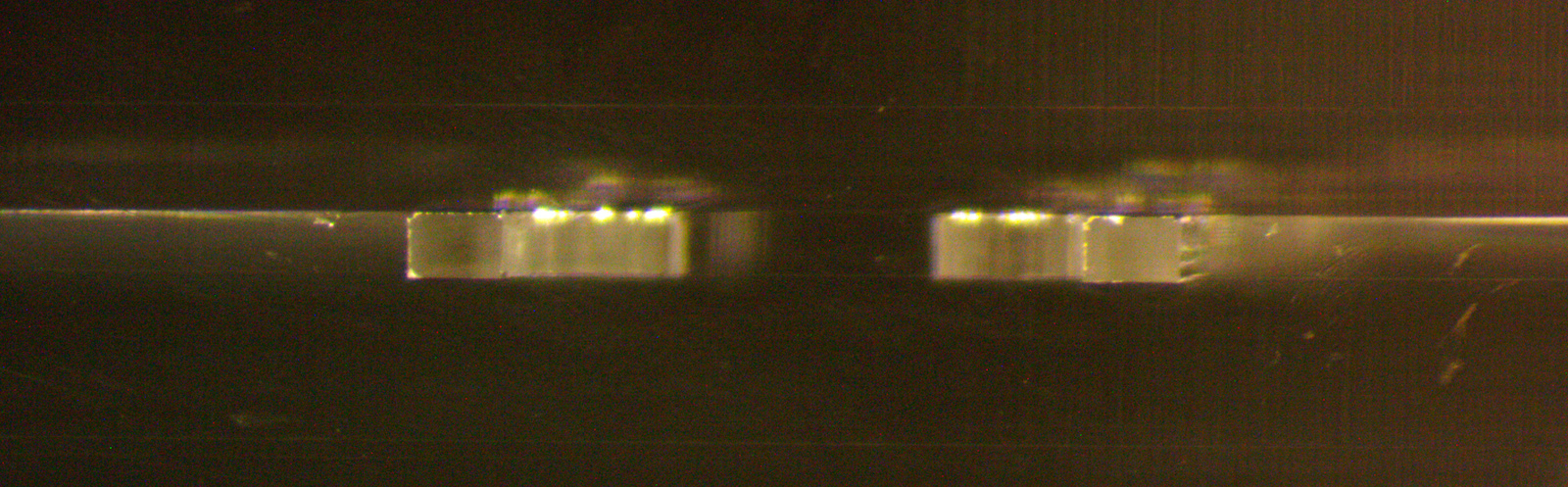
Arrays molded in July were imaged with a high-speed camera. End-on views of individual microneedles show light passing through their channels, and top-down views show the open channels across the array.
06 Partner with us
After a first discussion, we share our Technical Data Package under mutual NDA.
Start a conversationMicrofluidics, diagnostics and precision micro-parts, from design through scale.
Send your drawing or designOptical components and other parts where fine features must hold their tolerance.
Start a conversation07 Contact
Tell us the application and the part or molecule, and attach a drawing or design if you have one. Your message reaches the right person directly. We read everything and reply ourselves.
London · Los Angeles · Youba Diakite, CEO
Prefer to talk?
Book a 30-minute technical call →